Divine Mercy
The devotion to Divine Mercy is a powerful reminder of God's endless love and forgiveness, revealed through Saint Faustina Kowalska in the early 20th century. Through her visions, Jesus emphasised that His mercy is greater than any sin and that no one should be afraid to return to Him. At the heart of this devotion is a simple message: trust in Jesus and show mercy to others.
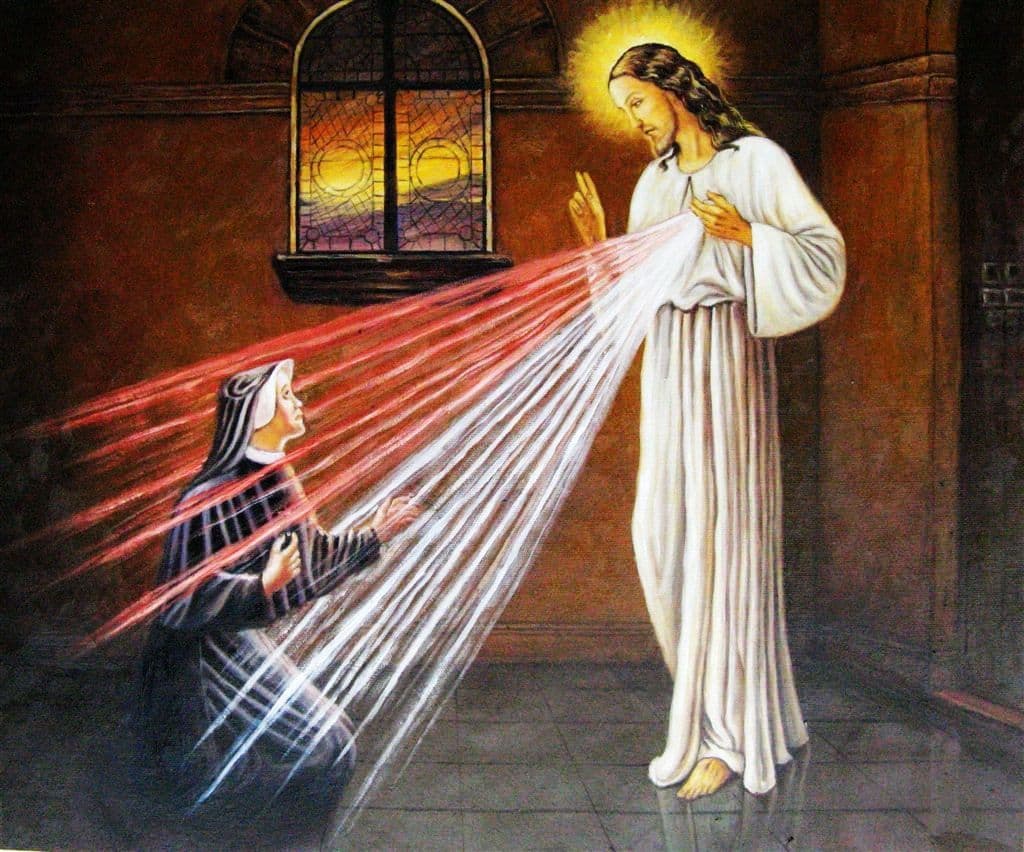
This devotion is expressed through several key practices. The Divine Mercy Image shows Christ with rays of red and pale light streaming from His heart, symbolising the blood and water that flowed from His side on the Cross. Beneath the image are the words, "Jesus, I trust in You," which capture the essence of the devotion. The Chaplet of Divine Mercy is a short, powerful prayer offered especially for sinners and for those who are dying, entrusting them to God's mercy.
A central moment of the devotion is Divine Mercy Sunday, celebrated on the Second Sunday of Easter. On this day, Jesus promised extraordinary graces, including the complete forgiveness of sins and punishment, for those who go to Confession, receive Holy Communion, and trust fully in His mercy. It highlights the Church's teaching that God never tires of forgiving us; rather, it is we who grow tired of turning back to Him.
Ultimately, Divine Mercy is not just about particular prayers or images. It is a way of life. It calls each person to place complete trust in God, to seek His mercy in the Sacraments, and to become instruments of mercy through acts of kindness, forgiveness, and love towards others.
The name of our partnership points to something very simple: we rely on the mercy of God.
In the Gospels, mercy is not God ignoring sin or lowering the bar. Mercy is God acting to save. Jesus forgives sins and calls people to conversion. He does not leave people as he finds them, but he also does not refuse them because they are a mess. He comes close, and he changes their lives for the better – and he offers the same to us.
The Cross is the clearest place we see what mercy really costs. Jesus takes upon himself what is broken in us and what is broken in the world. He bears it, and he defeats it by his death and resurrection. That is why the message of Divine Mercy is so important. Divine Mercy is what God's love looks like.
Christ's Divine Mercy is especially available to us in the sacraments of Confession and the Eucharist. In these divine gifts we receive Christ's mercy in a concrete way. We do not merely "believe in mercy"; we receive it, and we are expected to live it. Many people know the short prayer that is often associated with this devotion: "Jesus, I trust in You." It is the prayer of someone who has stopped trying to save themselves and has put their life in the hands of Christ.
Why Our Three Parishes Are Under This Patronage
Our Partnership brings together three parish communities. We are not three separate churches doing our own thing. We are one Catholic family, serving the same area, trying to do the same work: to worship God, to hand on the faith, and to bring people to Christ.
We are under the patronage of Divine Mercy because it says what we want parish life here to be like.
We want our churches to be places where people can return to the practice of the faith without embarrassment; where Confession is available and taken seriously; where the Holy Eucharist is the centre of parish life; where the Gospel is preached clearly; and where practical charity is part of ordinary Christian life.